
When you think of mountaineering and camping, your mind likely drifts to beautiful scenery, fresh air, and building a campfire—not the cold, hard ground. Yet, for many, the unfortunate reality is that they overlook a vital piece of gear: the sleeping pad.
When you are in a tent—separated from rocks, sticks, and the cold ground by only a few millimeters of plastic—you quickly realize that a sleeping pad can make or break your entire camping trip by providing insulation and cushioning. A quality pad is also essential for a good night's sleep and waking up refreshed during multi-day camping or outdoor excursions; while a sleeping bag is a must-have, it performs at its best only when paired with a camping pad underneath.
The most important benefits of using a suitable mountaineering sleeping pad
A high-quality camping mat offers two fundamental benefits: insulation and comfort. While these may seem basic, they directly impact your sleep quality, energy levels, and even your safety while camping. Camping mats offer a wide range of advantages that make them a top choice for adventurers, including the following:
1- The insulating benefit of underlays in preventing body heat loss.
Even in summer, the ground can be much colder than your body, which is a common cause of heat loss while camping; a camping mat acts as a barrier that slows down this heat loss by creating a thermal buffer between you and the cold ground. In colder conditions—even when using a tent and sleeping bag—the ground can absorb your body heat, leading to significant discomfort or even health risks.Regardless of their warmth rating, most sleeping bags lose a significant portion of their insulating power when compressed under your weight, leaving you vulnerable to heat loss through conduction (the transfer of body heat to the ground). A good camping pad acts as a reliable barrier, preventing cold from seeping into your sleeping bag and ruining a comfortable night's sleep.
The insulating properties of a mountaineering sleeping pad are determined by its internal structure and material composition; the level of insulation—typically measured by an "R-value"—indicates how effectively the pad prevents heat loss to the cold ground. Ratings generally range from 1 (minimal insulation) to 5 or 6 (excellent protection against cold), with higher R-values being crucial for camping in cold, mountainous environments. A thicker pad does not necessarily provide superior insulation, as designs vary based on the balance between factors such as weight and compactness.
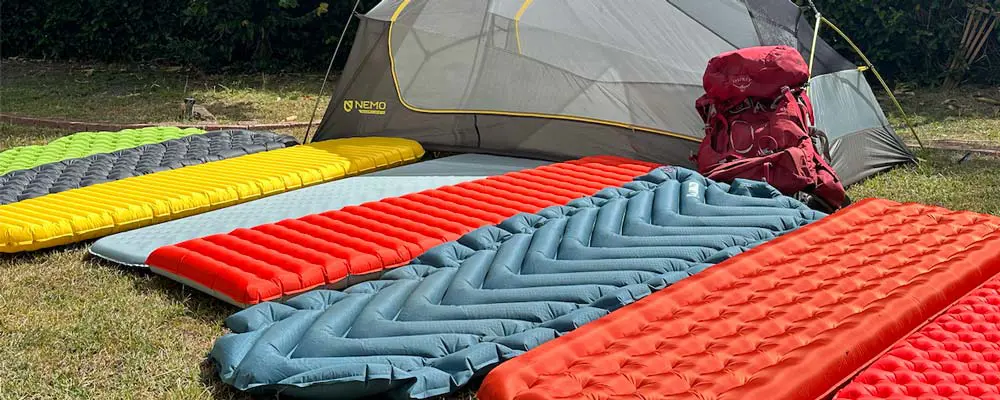
2- Comfort: one of the most important benefits of a standard mountaineering sleeping pad.
The second advantage of mountaineering sleeping pads is more intuitive than their insulating function, but just as important. Even a small rock or tree root can make sitting and sleeping difficult. The ergonomic comfort of a sleeping pad protects your body from uneven ground. The ultimate and primary purpose of a camping pad is to create a comfortable surface for resting and sleeping. A good pad, with ergonomic cushioning features, provides full-body support and allows you to rest well and wake up refreshed.
Such a pad creates a cushioned surface that helps distribute body weight evenly, reduce pressure points, and minimize possible discomfort caused by rough terrain. This cushioning effect is especially important for side sleepers or for people with joint sensitivity who need extra support while resting outdoors. By protecting against ground temperature, absorbing impact, and creating a barrier between the person and uneven terrain, these versatile mountaineering essentials can transform potentially challenging outdoor sleeping conditions into a restful and rejuvenating experience.
The biomechanical implications of mountaineering sleeping pad design are significant; proper spinal alignment and the reduction of pressure points play a crucial role in preventing muscle strain and joint discomfort during outdoor excursions and camping trips. When the body rests on an uneven surface, muscles remain partially engaged throughout the night, leading to increased tension and potential fatigue the following day. High-quality camping pads distribute body weight evenly, allowing muscle groups to rest fully and enter a more restorative recovery state.
3- Weight and portability of the mountaineering sleeping pad
High-quality, standard camping mats are crafted from materials that offer excellent insulation and comfort while remaining lightweight and compact enough to pack down to a small size. Materials such as foam, lightweight nylon, and advanced synthetic insulation have revolutionized mat design, enabling outdoor enthusiasts to carry comfortable, durable gear without adding significant weight. Compactness and packability are key advantages of these standard mats for mountaineering enthusiasts; modern designs have improved dramatically in this regard, with some models compressing to the size of a water bottle, making them incredibly portable.
The weight and bulk of the chosen sleeping pad depend on the specific activity and mode of transport; for short mountaineering trips where you carry your own gear and cover long distances solo, priority should be given to models that emphasize a lightweight design and compact dimensions. While a thicker pad offers superior cushioning, this often comes at the expense of low weight and compactness. A common mistake is prioritizing weight over insulation performance; although lightweight pads may seem appealing, choosing a mat with an insufficient R-value can lead to significant body heat loss in colder environments.

4- Another advantage of a mountaineering sleeping pad is its high durability and longevity.
These mats are built for durability and offer exceptional resistance to wear and tear; unlike traditional mats that can develop holes and wear out over time, mountaineering mats maintain their structural integrity under various conditions. High-quality mountaineering mats are generally cost-effective and offer good value. Reinforced materials and advanced manufacturing techniques now enable these mats to withstand rugged terrain and repeated use while ensuring a long lifespan.
5- Variety and adjustability of mountaineering sleeping pads
Camping pads come in a variety of sizes, materials, and thicknesses, making them suitable for diverse needs and preferences. Many manufacturers offer adjustable cushioning options, allowing you to select a pad with the specific thickness and size that best suits your requirements. A common mistake when purchasing is overlooking individual body characteristics; a mismatch between the pad's design and the user's physiology can lead to poor sleep quality, muscle tension, and physical discomfort the following day. You should also consider the dimensions of your mountaineering tent to avoid purchasing a pad that is too large.
6- Protection against dirt and moisture with camping groundsheets.
Sleeping mats help keep the body off the cold, damp ground and provide protection against dirt and moisture.
7- Last but not least, the advantage of a mountaineering sleeping pad is its ease of use.
Camping mats are easy to set up and use, and generally require little maintenance.
Ultimately, an ideal camping mat combines various functional features tailored to specific camping scenarios. To learn more about making smart choices for outdoor rest and sleep, contact the experts at Asan Poosh or browse the available products in the online store.
 Receiving information...