
A wide range of backpacks is available on the market today, but the two main types are mountaineering and tactical backpacks. Although many people use them interchangeably, there are key differences between them, and each has its own unique strengths. Read on to learn about the differences between tactical and mountaineering backpacks and ensure you choose the right one for your needs.
What is the difference between a tactical backpack and a hiking backpack?
When it comes to preparing for outdoor activities, choosing the right backpack is a crucial decision. Tactical backpacks and mountaineering backpacks are two popular options for different purposes, with each type designed with specific features to meet the needs of diverse users. Below, we examine the key differences between these two styles of backpacks:
1- Differences in the design and construction of tactical and mountaineering backpacks
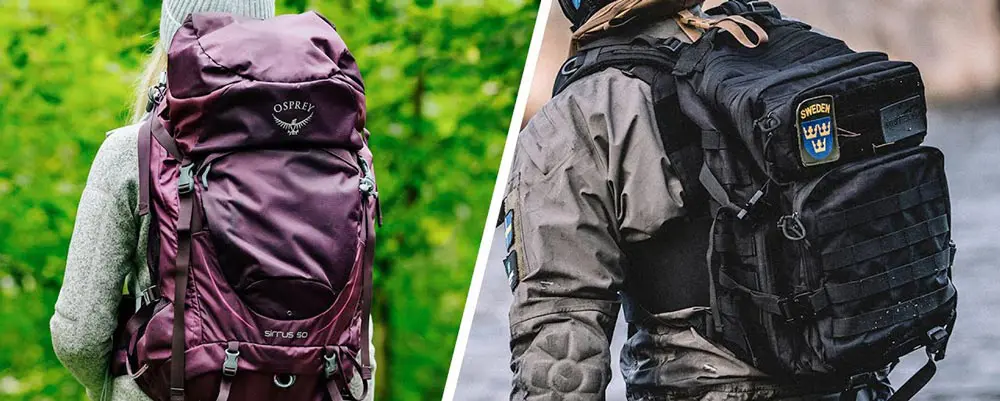
Mountaineering backpacks feature a streamlined design that facilitates comfortable movement along the trail; they are equipped with padded shoulder straps, waist belts, and ergonomic back panels to ensure comfort during long treks. These packs prioritize comfort, lightweight materials, and efficient load distribution, allowing you to easily carry your gear over long distances, while many also incorporate ventilation systems to help keep your back cool and dry.
On the other hand, tactical backpacks feature a standardized structure and lack the flexibility of mountaineering packs, as their design is inspired by the standard soldier's loadout. Originally designed for military and law enforcement personnel, tactical backpacks are built to withstand harsh conditions and carry specialized equipment; they prioritize durability, organization, and performance for use in challenging environments and missions.
Access to the contents also varies significantly; most mountaineering backpacks open only from the top, whereas the best tactical packs feature triple-zipper designs that allow access to the main compartment when the bag is laid flat.
2- Difference in capacity and weight between mountaineering and tactical backpacks
Many tactical backpacks typically have a capacity of 15 to 20 liters; while larger versions exist, their increased size—and non-standard dimensions—may come with a higher price tag. Due to their rugged materials and additional features, tactical packs usually weigh more than standard hiking backpacks, yet this extra weight is justified by the durability and performance they deliver in challenging situations. Tactical backpacks are available in a wide range of sizes, spanning from compact daypacks to large packs designed for multi-day trips.
Since mountaineering backpacks are designed for carrying gear over long distances, they are typically lighter and sit more comfortably on the shoulders. Available in various capacities, these packs are engineered to distribute weight evenly and prevent strain during long expeditions. Depending on the specific type of mountaineering activity, they range in size from small 30-liter models to large 110-liter versions. To keep the weight down, they are constructed from lightweight, tear-resistant fabrics—such as nylon or polyester—chosen for their high strength-to-weight ratio.
3- Comparison of mountaineering backpacks and tactical backpacks in terms of material durability
Mountaineering and tactical backpacks serve different purposes; those who need a mountaineering pack are not necessarily as concerned with durability as they are with weight and water resistance. Tactical backpacks, on the other hand, are designed for survival and thus require tougher materials capable of withstanding the elements; while mountaineering packs are also durable, they pale in comparison to their tactical counterparts.
Tactical backpacks prioritize robust construction and are manufactured from materials such as Cordura nylon or heavy-duty fabrics like industrial-grade 600D Oxford cloth to ensure durability in harsh conditions; reinforced stitching and rugged zippers further contribute to their overall strength. In contrast, mountaineering backpacks are typically made from ripstop nylon, which minimizes tearing, offers water resistance, and is lightweight.
4- Differences in expansion capabilities between tactical and mountaineering backpacks.
Modular Lightweight Load-carrying Equipment (MOLLE) plays a crucial role in selecting the best backpack, as it offers numerous expansion options that allow you to get the most out of your pack. MOLLE consists of a system of webbing straps that enable the attachment of extra accessories without interfering with the backpack's primary function. While this feature is common in tactical packs, very few hiking backpacks offer such extensive customization capabilities.
For both types of backpacks, a key factor to consider regarding capacity and expandability is the placement of the water bladder or bottle; many hiking packs feature dedicated compartments for hydration reservoirs, often including ports for the drinking tube so you can easily drink while hiking.
5- Organizational capabilities of tactical and mountaineering backpacks
Tactical backpacks feature multiple compartments and pockets for efficient gear organization—including dedicated spaces for items such as hydration bladders, radios, and first-aid kits—and prioritize quick, easy access to essentials. Designed with versatility in mind, these packs are suitable for a wide range of activities, including camping, survival situations, and emergencies.
Mountaineering backpacks typically feature a main compartment with top access, though some also offer panel access or a combination of both. They are equipped with external pockets and attachment points for gear requiring quick access—such as water bottles and trekking poles—and most include rain covers to protect your equipment from the elements.
6- Comparing color differences between tactical and hiking backpacks.
Mountaineering backpacks are available in various high-visibility colors—such as orange, yellow, and bright green—that make them easier for other climbers or hunters to spot from a distance; this high visibility can also prove useful in emergencies, such as getting lost.
Tactical backpacks are designed to allow the user to blend in with the crowd; consequently, they are produced in subdued colors such as tan, dark green, olive green, dark gray, or black, with combinations of these colors also serving as a form of camouflage.
How do you choose the right backpack?
To make an informed decision between a tactical backpack and a hiking backpack, consider the following factors:
✓ Intended Use:
Before considering specific features, you should clearly define how you will primarily use the backpack and take into account the environments and conditions you will encounter.
Tactical backpacks excel in durability and versatility, making them suitable for short-duration, high-intensity activities.
Mountaineering backpacks prioritize comfort and weight distribution, making them ideal for longer outdoor excursions.
✓ Intended Use:
Tactical backpacks are designed for situations requiring quick access, whereas hiking packs are built for long journeys with a focus on comfort. Assess your budget and look for a pack that offers the best value for your investment, balancing your desired features with long-term durability and reliability.
✓ Personal Preference:
While functionality is crucial, do not overlook the importance of personal preferences and budget when making your choice; consider the pack's aesthetics and style—if it aligns with your taste, you are more likely to use and enjoy it.
The best uses for each type of backpack
A tactical backpack is ideal for:
• Military missions and training
• Law enforcement and security operations
• Survival and emergency preparedness
• Rugged outdoor activities
• Tactical drills and shooting sports
If you need a backpack that can withstand harsh environments and keep your gear organized, a tactical backpack is an excellent choice.
Mountaineering backpacks are ideal for:
• Day hikes and trail running in the mountains
• Multi-day camping and hiking trips
• Mountaineering and exploratory treks
• Any outdoor adventure where you need to carry gear comfortably over long distances.
When comfort and lightweight performance are your top priorities, a mountaineering backpack is your ultimate ally on the trail.
 Receiving information...