
Knee pain is a common issue among hikers; a hallmark symptom of hiking-induced knee pain is discomfort around the kneecap, typically manifesting after several hours of trekking. While hiking uphill can be strenuous due to steep gradients and rocky terrain, it is actually the descent that poses a risk of damage to the knee joint and surrounding cartilage; this is because the compressive forces exerted on the knee during downhill hiking are three to four times greater than those experienced during the ascent. Selecting and correctly using suitable trekking poles can effectively protect your knees by reducing the load and improving stability; however, these should be used in conjunction with appropriate footwear and other specialized gear.
Many people go mountaineering for adventure and recreation without having previously spent much time on mountain trails. This can be challenging for your joints, as the structure of the knee joint—much like muscles—requires time to prepare. It is not that we cannot engage in amazing activities later in life; rather, the knee simply needs time to adapt.
The role of trekking poles in reducing strain on the knees and joints.
By redistributing body weight onto your arms and shoulders, trekking poles reduce the impact on your knees; they also stabilize your gait—especially on descents—thereby placing less strain on your knees with every step. On downhill sections, the poles act like a pre-braking system: as the tip touches the ground first, the impact is dissipated before your knees are compressed, keeping your upper body stable. If you hike all day without poles, your legs bear the entire physical load; using proper trekking poles helps mitigate the cumulative effect of thousands of repetitive minor impacts and reduces overall strain.
A 2009 study on injuries revealed that 71% of ankle and knee injuries sustained in the mountains occurred among individuals not using trekking poles, with the majority happening during the descent. The *Journal of Sports Sciences* states that standard trekking poles can reduce forces on lower-limb joints by up to 25%. One of the primary benefits of trekking poles is joint support; using them significantly reduces the forces exerted on the knees and ankles during descents, thereby potentially lowering the risk of injury.
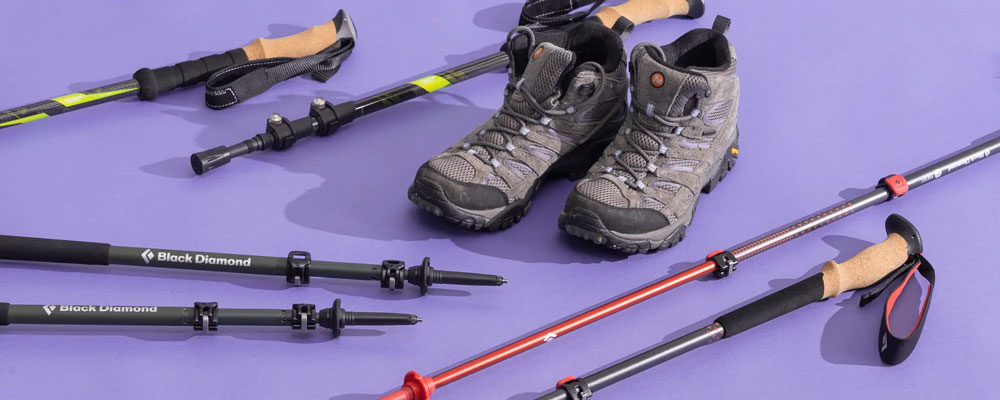
How do trekking poles reduce pressure on the knees?
✔ Pre-braking: When used at the correct length on descents, the pole tip plants ahead of your foot, absorbing the impact.
✔ Force redistribution: With every step, a portion of the load is transferred from the knees or ankles to the wrists and shoulders.
✔ Stability and balance: Additional contact points reduce instability caused by steps, loose rocks, gravel, or mud.
Trekking poles are valuable tools for shock absorption on the trail; when used on flat terrain, they exert 7 kg of downward force on your lower limbs with each step—increasing to 10 kg on ascents and 13 kg on descents. A suitable pair of poles also helps stabilize the lower leg; using them reduces varus movement at the knee, meaning the lower leg bones (tibia and fibula) align better with the femur compared to walking without poles. This reduces torque and the likelihood of injuries caused by twisting or overuse resulting from poor form.
Other benefits of using hiking poles
As previously mentioned, trekking poles offer numerous benefits and provide more than just simple support; for instance, if you are crossing a stream of unknown speed or depth, probing it with the tip of a pole is far safer than using your foot. They can also serve as supports for emergency or ultralight shelters. However, their primary advantages lie in the physical benefits they offer during a hike—such as improved balance, joint support, and increased calorie burning—since using trekking poles engages your upper body, thereby boosting your caloric expenditure.
Kinesiology experts have found that these tools can improve walking efficiency at higher speeds and reduce the forces exerted on the knees. Trekking poles distribute the workload across muscle groups, allowing your upper body to handle some of the tasks typically borne by the lower body. This—combined with joint support and reduced perceived exertion—means that, overall, you may experience less strain while expending more energy when using trekking poles.
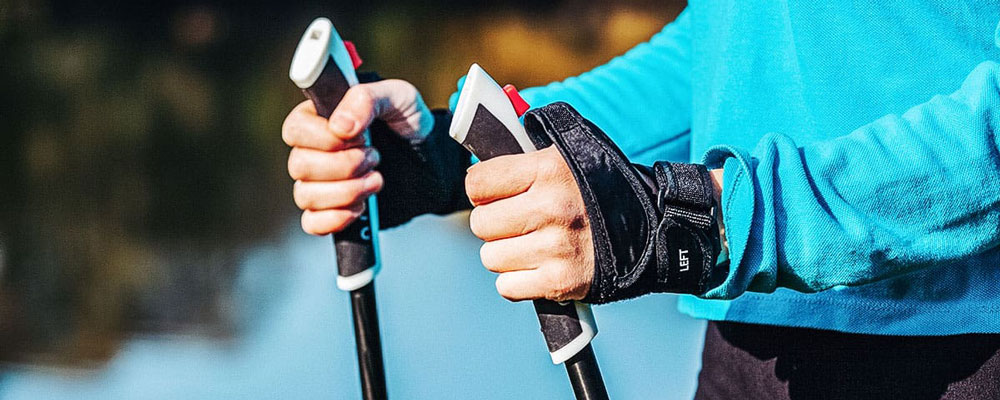
What are the common mistakes made when using trekking poles?
Studies show that using trekking poles comes with both advantages and disadvantages, and whether or not you should use them depends entirely on your specific circumstances and preferences. Provided that individuals progress steadily and gradually—and do not have pre-existing serious knee issues—they generally adapt well to the conditions and environments of mountaineering; however, there are common mistakes made when using trekking poles that can lead to problems, including:
• Not using straps: Without wrist straps, your fingers must bear the full force of the pole, leading to premature fatigue and poor technique.
• Incorrect pole length for descents: If the pole is too short, the tip cannot provide initial braking; if it is too long, your shoulders will be forced upward.
• Using poles only for ascents: Using trekking poles during descents is crucial for relieving strain on the knees.
• A "death grip": Relax your hand and let the wrist strap bear the vertical load of the pole.
Preparing trekking poles to reduce strain on the knees.
✔ Proper trekking pole length: Stand upright, bend your elbows at a 90-degree angle, and adjust the pole to the corresponding length; for downhill sections, extend the pole by an additional 5 to 10 centimeters so that the tip makes contact with the ground first.
✔ Pole wrist strap: Pass your hand up through the strap loop, position the strap beneath your palm, and then grip the handle comfortably.
✔ On steady slopes, it is best to use a "foot-pole-foot-pole" rhythm; for steeper descents, position both poles in a V-shape before moving down.
✔ Practice: Train on stairs or a short, steep hill to master the timing of using trekking poles before descending.
✔ Stretch before and after hiking: Loosening up your muscles beforehand helps your legs and knees become more flexible. Since your muscles contract during the hike, you should stretch again afterward to help them return to their natural length.
Types of trekking poles suitable for the knees
A wide variety of trekking poles is currently available, catering to everything from flat terrain and moderate hikes to mountain trail running. Generally, the lighter the pole, the easier it is to maintain proper timing and technique during hours of downhill hiking. However, you should choose the material based on the terrain and your skill level rather than marketing claims; carbon poles help maintain rhythm and reduce arm fatigue, whereas aluminum poles perform better on rocky ground where impacts are likely.
 Receiving information...