
Your safety shoes are exposed daily to moisture, dust, heat, chemicals, and other elements; direct contact with these factors affects their lifespan. Given the high cost associated with the quality and safety features of most safety shoes, you naturally want them to remain in good condition and retain their effectiveness for as long as possible—a goal achievable through regular maintenance and proper cleaning.
Depending on your job and work environment, your safety shoes are exposed to various hazards that may accelerate wear and tear; therefore, it is essential to care for them properly to ensure the comfort and safety needed to work under the best possible conditions.
Tips for Cleaning Safety Shoes
To ensure the longevity of your safety shoes, you must care for them and clean them regularly using appropriate products; the cleaning products you use depend on the material of the shoes. The most important points regarding the cleaning of any type of safety shoe are:
- *Do not use any corrosive chemicals, including bleach, when cleaning your safety shoes.
- *Like other safety equipment, safety shoes should not be washed in a washing machine or put in a dryer.
- *After use, remove the insoles from your shoes so that both the shoes and the insoles can lose moisture and dry out before the next use.
- *Remove the laces before cleaning the safety shoes.
- *Clean with lukewarm water; if necessary, you can also use a fragrance-free liquid detergent.
- *Dry under normal conditions; avoid placing the shoes on a radiator, dryer, or similar heat source.
- *Do not store your safety shoes in hot, humid, or poorly ventilated areas, as this can lead to mold growth.
How do we clean the outside of safety shoes?
Depending on the material of the safety shoe's upper, there are various cleaning techniques:
✔ Cleaning leather safety shoes:
Leather is a natural material that is sensitive to external elements and prone to aging, drying out, or staining; furthermore, it requires care to maintain its aesthetic appeal, flexibility, and durability. To care for leather safety shoes, it is recommended to apply a waterproofing spray before wearing them; remember to repeat this process monthly to preserve the protective qualities over time, and ensure you apply only a thin layer so the leather's pores can breathe. Depending on the type of leather, there are two methods for cleaning leather safety shoes:
1- For safety shoes made of smooth leather (full-grain leather), first remove dust with a soft cloth, then apply a leather conditioning cream; this nourishes and moisturizes the leather while maintaining its shine.
2- For safety shoes made of softer leather (split leather, nubuck, or synthetic leather), remove all traces of dirt and dust daily by brushing with a soft brush; do not use conditioning cream on these types of leather.
✔ Cleaning microfiber safety shoes:
Microfiber is a type of synthetic leather made from man-made fibers; much like genuine leather, it feels very soft to the touch. Microfiber safety shoe uppers can be cleaned using a damp cloth or a soft sponge with a little soap, then wiped with a soft, dry cloth to remove any excess moisture.
✔ Cleaning safety shoes with fabric uppers:
Fabric safety shoes are made from natural or synthetic fibers; waterproofing them protects against dirt and premature wear. To clean the uppers, use a damp cloth; for the soles (which come into direct contact with the ground), you can use a damp sponge or a wet toothbrush with soap to remove accumulated debris and dirt.
✔ Cleaning GORE-TEX safety shoes
If you wish to clean safety shoes featuring functional membranes such as GORE-TEX, ensure you use products suitable for these materials; unsuitable products (such as wax or grease) can impair the membrane's performance and breathability.
How do we clean the inside of safety shoes?
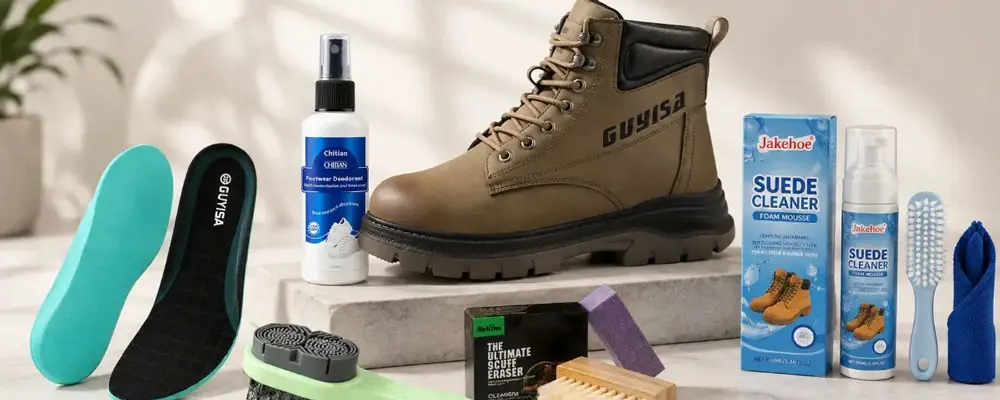
When discussing the cleaning of safety shoes, we often focus on the exterior; however, cleaning the interior is equally important for your comfort and for preventing unpleasant odors and fungal growth. Bad odors stem from bacteria that colonize and multiply inside the shoe; feet confined within footwear generate moisture and sweat, creating an ideal environment for the bacteria already present on the skin to thrive. These bacteria produce methanethiol—the gas responsible for foot odor—by breaking down skin cells.
- *We recommend spraying the soles of your feet and the insides of your safety shoes daily—after returning from work—or on a regular basis with an antibacterial deodorant; this neutralizes unpleasant odors and eliminates or inhibits the growth of parasitic fungi.
- *Wear socks and insoles made of moisture-wicking, breathable materials.
- *Change your socks every day and wash them at a temperature above 40 degrees Celsius.
- *After taking off your safety shoes, place them in a well-ventilated area rather than in cardboard or plastic boxes.
- *If possible, rotate your shoes regularly to let them air out for a few days.
Tips for Extending the Lifespan of Safety Shoes
1- Clean your safety shoes after each use.
Mud and grime accelerate the wear and tear of your footwear materials; start by using a stiff brush to remove stubborn dirt, then prepare a mixture of lukewarm water and mild soap to clean the shoes with a soft cloth or sponge. Cleaning your safety shoes daily—or every few days—not only ensures comfort but also prevents dirt from accumulating or turning into permanent stains.
2- Maintain your shoes properly.
The biggest mistake you can make is placing your damp shoes in a storage room or enclosed space after a long day at work; if the air is cold and humid, the lifespan of your safety shoes will be significantly reduced. The reverse is also true: never place your shoes in front of a fire or heating appliance, as the heat can damage the adhesives used in your shoes.
| Note: Allow the safety shoes to dry completely after cleaning before using them; removing the insoles will help them dry faster. |
3- Resting and airing out safety shoes.
Even safety shoes need a rest now and then; this is particularly important for leather footwear, as leather can absorb a significant amount of moisture but requires about 24 hours to release it. To give your shoes a break, we recommend purchasing a second pair of safety shoes for daily use and rotating them every few days. To air out your shoes, remove the insoles and loosen the laces to ensure no damp spots remain.
4- Check your shoes regularly.
Did you know that the soles and seams of your safety shoes tend to wear out relatively quickly? That is why regular inspections are important. Check whether the soles still provide sufficient traction; worn-out soles increase the risk of slipping. You should also examine the seams to see if any have come loose. Additionally, periodically assess the overall condition of the shoes—look for cracks or tears in the material and note any discomfort while wearing them. These are often the first signs of wear or potential issues. Spotting them early allows you to prevent further damage. In many cases, the shoes can still be repaired, meaning you won't necessarily need to buy a new pair right away.
5- Replace the insoles of the safety shoes.
Safety shoe insoles absorb moisture and wear out faster than the shoes themselves; that is why you should replace them at least once a year. Doing so ensures greater hygiene and comfort for your feet while extending the lifespan of your shoes.
 Receiving information...