
These are questions that you may ask yourself every morning or when choosing to buy the right office clothes, and depending on the rules your company has in place, you can be unique in your choice. Dress code means setting a framework for the type of clothing you can wear to your workplace. Some companies and organizations provide office clothes for their employees, but many others only specify what group of clothes employees and workers can wear by providing a dress code.
Office dress codes
Depending on the work environment and the rules provided by the employer, employees in office environments choose their work clothes. Office clothes depend on the type of job, whether it is public or private, the number of employees, having clients, and are different for women and men. Whether the company is responsible for providing office clothes or the employee intends to buy them himself, this type of work clothes should, in addition to coordinating with the company theme and other employees, have comfortable fabric and a suitable size so that it does not hinder the employees' free activity. In fact, in addition to the benefits that wearing formal office work clothes has for employees, this choice can lead to harmony between employees and their sense of belonging to the group and eliminate their differences. The type of fabric of office work clothes is an important factor when choosing and purchasing, because its appropriate weight along with the ability to circulate air can provide suitable conditions for people's comfort.
The importance of using work clothes has caused employers and company managers to set rules for employees regarding the type of clothing to unite them. These rules are presented in the form of office work dress codes and may be very strict or liberal depending on the type of profession and job, for example, some companies give employees uniform and uniform work clothes and some leave them free to choose the clothes they want.
Office work dress codes
In general, the type of office work clothes directly depends on the CEO's opinion and the company's rules and may even be different for different departments of an office. But there are usually four types of office work dress codes: formal, semi-formal or professional, informal and comfortable.
1. Formal Wear
If you work for a government company, meet with executives regularly, or hold a high-level position, you may be required to wear formal wear to work.
Formal wear for men:
• A button-down suit in a solid, neutral color such as black, gray, or navy.
• Ties and other accessories should be simple in style, in solid, bright colors (such as a red tie) or patterned neutral colors (such as a navy plaid tie), and of high quality.
• Dress shirts should be white, button-down, and collared.
• Shoes should be formal, brown or black, not loafers.
• Men’s hair should be well-groomed; short hair is generally acceptable. Nails should also be short, clean, and smooth.
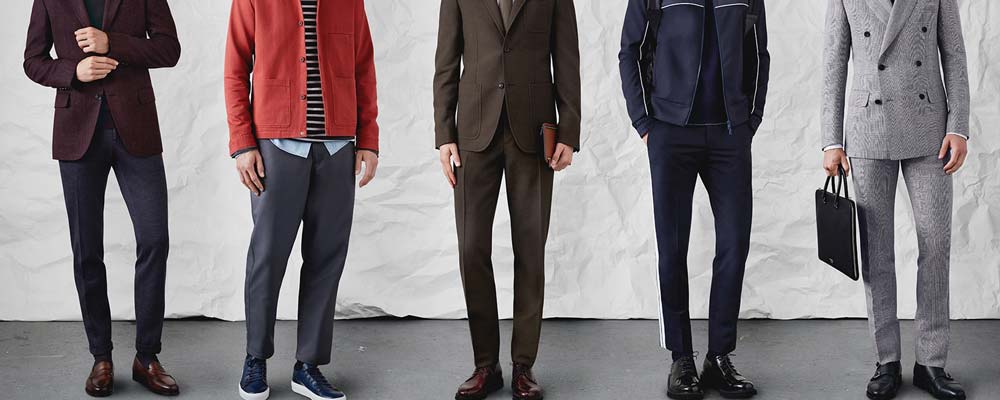
Formal office attire for women:
• Office pantsuit in a neutral color such as black, navy or brown. Office coats should have buttons and a collar and be below the knee.
• Office shoes should be closed-toe and have low heels, the color of these shoes should be neutral such as brown, black, gray or navy.
• If accessories are used, they should be small and in soft or neutral colors.
• The use of a veil, shawl, scarf or veil may vary according to the rules of each company, but their color should also match the color of the office pantsuit.
• Nails should be clean and unpolished or with a neutral color polish.
2. Semi-formal (business) work attire
This type of office work attire is a little more relaxed than formal work attire, but they are still neat, conservative and relatively formal, they may be a little more liberal in color or design. You can add personality to your work attire with accessories and color choices while still maintaining a professional look.
Men's Semi-Formal Workwear:
• One- or two-button suit. The colors of a semi-formal suit should still be conservative, but you have a more relaxed pattern. You can also wear light-colored pants with a sports jacket.
• Ties and other accessories can be chosen in different colors and patterns, for example, you can safely wear a blue striped tie.
• Formal shirts in formal workwear should be collared and buttoned, but can be chosen in different colors, as long as their color is not loud and striking.
• In this type of office attire, shoes should be in soft, dark colors and be polished oxfords or loafers.
• Hair and nails should be neat, but consult with the company's human resources about an acceptable hairstyle. You can also use accessories such as a watch (preferably silver, gold or white gold) and cufflinks, if necessary.
Semi-formal work attire for women:
• Office coat and trousers in conservative colors, trousers should be black, brown or navy.
• Coats should not be more than two fingers away from the knee.
• Wearing jewelry is okay as long as they are not distracting.
• Nails should be neat and unpolished or in neutral colors.
• Check with the company's human resources about the use of a scarf, headscarf or veil, it is better if they have neutral colors and match the coat and trousers.

3. Business Casual Work Attire
Business casual is one of the most common dress codes in many private companies, allowing employees to add personality to their work attire without appearing unprofessional. In a business casual setting, you can use more color and accessories. However, the term “business casual” can mean different things to different organizations, so it’s always best to check with human resources rather than making assumptions.
Business Casual Work Attire for Men:
• Men can wear colored collared shirts in this type of work dress code, and there is no need to wear a jacket. These dress shirts can have polka dot or striped patterns or have short sleeves.
• Wearing a tie is optional, but should still be in a subdued pattern and color, most colors are acceptable.
• You can wear a sweater or a sweater over a collared shirt, but the patterns should be acceptable and in neutral primary colors.
• Dressy pants, such as black pants or khaki suits, worn without a sports jacket.
• The accessories you choose can be more casual and sporty, such as a leather watch.
• Shoes in this type of office attire can be oxfords, loafers, or another comfortable yet stylish choice, in brown or black.
• This dress code may allow more freedom for hairstyles and allow for longer hair.
Professional Informal Work Attire for Women:
• Women can wear separates instead of formal pantsuits, for example, a coat with pants or a long skirt.
• Coats do not necessarily have to be collared and buttoned, their colors should be solid or have a pattern such as stripes; You should avoid short coats or bright, flashy colors.
• The use of accessories is free, but there may be restrictions on nail polish colors.
• In addition to formal shoes, you can wear comfortable shoes, but they must be closed to the front. Shoes can be any color, although black, brown, crimson, navy, and gray are the most appropriate.
4- Casual office attire
If you work in a private office or a private company, you may not have any guidelines for work dress restrictions or only have a few brief rules for your clothing. In this case, since the choice of work attire is up to the individual, differences between employees are revealed and judgments may also be made. Of course, even in this case, the casual work attire you choose should be in harmony with the type of work you do and the atmosphere of the office environment.
Casual office attire for men:
• It is possible to wear casual pants and jeans in this dress code unless prohibited by human resources. Of course, these pants should be dark colors and have a straight cut.
• There is no problem with using collared polo shirts or sports shirts with patterns and moderate colors.
• The office shoes used in this category can be of any type and do not have to be formal, according to the company's rules, even the use of sneakers may be allowed.
• The hairstyle and nails can be informal, but they should not be out of the ordinary. The use of sporty and colorful accessories is also allowed.
Comfortable office work clothes for women:
• Women can also wear comfortable coats and pants and jeans, as long as they are not too tight, short, and thin. Some companies also allow their office employees to wear suits and skirts or suits.
• Shoes in this dress code can be sporty (such as sneakers) or open-toed, but the use of sandals and slippers is still not allowed.
• The use of accessories is allowed and light nail polish is not a problem.
• A scarf, headscarf, or veil can be informal or colorful.
 Receiving information...